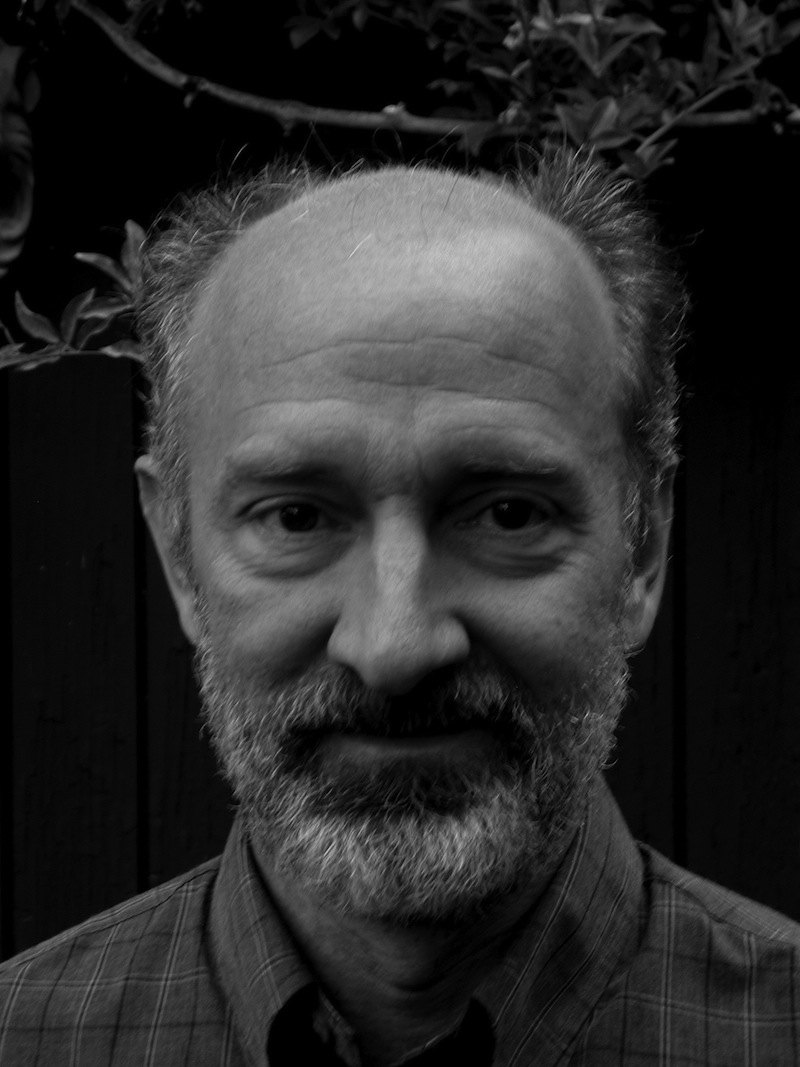
James Meiss has published 142 refereed articles, 41 reports, and four books. His research is on Hamiltonian, symplectic and volume preserving dynamics, the transition to chaos, the theory of transport, and computational topology. Problems studied include the geometry of symplectic dynamics, the break-up of invariant tori in conservative systems, the structure of tangles in stable and unstable manifolds, transport in a dynamical system through a complex mixture of regular and chaotic regions, quantifying and optimizing mixing in laminar, time-dependent fluid flows, convergence of Birkhoff averages, studying transport, symmetry, and structure for particles in magnetic fields for fusion devices, and categorizing the topological properties of simplicial complexes approximating the invariant sets and of a dynamical system for such applications as prediction of solar flares and swarming of bacteria.
keywords
dynamical systems, Hamiltonian dynamics, volume preserving dynamics, transition to chaos, transport and mixing, piecewise smooth bifurcations, nonautonomous dynamics, computational topology, plasma physics
Advances in Intelligent Data Analysis XVI.
Lecture Notes in Computer Science (including subseries Lecture Notes in Artificial Intelligence and Lecture Notes in Bioinformatics).
2017
APPM 3010 - Chaos in Dynamical Systems
Primary Instructor
-
Fall 2019 / Fall 2023
Introduces undergraduate students to chaotic dynamical systems. Topics include smooth and discrete dynamical systems, bifurcation theory, chaotic attractors, fractals, Lyapunov exponents, synchronization and networks of dynamical systems. Applications to engineering, biology and physics will be discussed.
APPM 3310 - Matrix Methods and Applications
Primary Instructor
-
Spring 2020 / Spring 2022 / Fall 2025
Introduces linear algebra and matrices with an emphasis on applications, including methods to solve systems of linear algebraic and linear ordinary differential equations. Discusses vector space concepts, decomposition theorems, and eigenvalue problems. Degree credit not granted for this course and MATH 2130 and MATH 2135.
APPM 4360 - Methods in Applied Mathematics: Complex Variables and Applications
Primary Instructor
-
Spring 2026
Introduces methods of complex variables, contour integration and theory of residues. Applications include solving partial differential equations by transform methods, Fourier and Laplace transforms and Reimann-Hilbert boundary-value problems, conformal mapping to ideal fluid flow and/or electrostatics. Same as APPM 5360.
APPM 4440 - Undergraduate Applied Analysis 1
Primary Instructor
-
Fall 2020 / Fall 2022 / Fall 2024
Provides a rigorous treatment of topics covered in Calculus 1 and 2. Topics include convergent sequences; continuous functions; differentiable functions; Darboux sums, Riemann sums, and integration; Taylor and power series and sequences of functions.
APPM 4450 - Undergraduate Applied Analysis 2
Primary Instructor
-
Spring 2018 / Spring 2019 / Spring 2021 / Spring 2023 / Spring 2025
Continuation of APPM 4440. Study of multidimensional analysis including n-dimensional Euclidean space, continuity and uniform continuity of functions of several variables, differentiation, linear and nonlinear approximation, inverse function and implicit function theorems, and a short introduction to metric spaces.
APPM 5360 - Methods in Applied Mathematics: Complex Variables and Applications
Primary Instructor
-
Spring 2026
Introduces methods of complex variables, contour integration and theory of residues. Applications include solving partial differential equations by transform methods, Fourier and Laplace transforms and Reimann-Hilbert boundary-value problems, conformal mapping to ideal fluid flow and/or electrostatics. Department enforced prerequisites: APPM 2350 or MATH 2400 and APPM 2360 and a prerequisite or corequisite course of APPM 3310 or MATH 3130 or MATH 3135. Same as APPM 4360.
APPM 5460 - Methods in Applied Mathematics: Dynamical Systems and Differential Equations
Primary Instructor
-
Spring 2018 / Fall 2019 / Fall 2020 / Fall 2022 / Fall 2023 / Fall 2024 / Fall 2025
Introduces the theory and applications of dynamical systems through solutions to differential equations. Covers existence and uniqueness theory, local stability properties, qualitative analysis, global phase portraits, perturbation theory and bifurcation theory. Special topics may include Melnikov methods, averaging methods, bifurcations to chaos and Hamiltonian systems. Department enforced prerequisites: APPM 2360 and APPM 3310 and APPM 4440.
APPM 6950 - Master's Thesis
Primary Instructor
-
Fall 2019 / Spring 2020 / Fall 2023 / Spring 2024 / Fall 2025 / Spring 2026
May be repeated up to 6 total credit hours.
APPM 8100 - Seminar in Dynamical Systems
Primary Instructor
-
Spring 2018 / Fall 2018 / Spring 2020 / Spring 2021 / Spring 2022 / Spring 2023 / Spring 2024 / Spring 2026
Introduces advanced topics and research in dynamical systems.