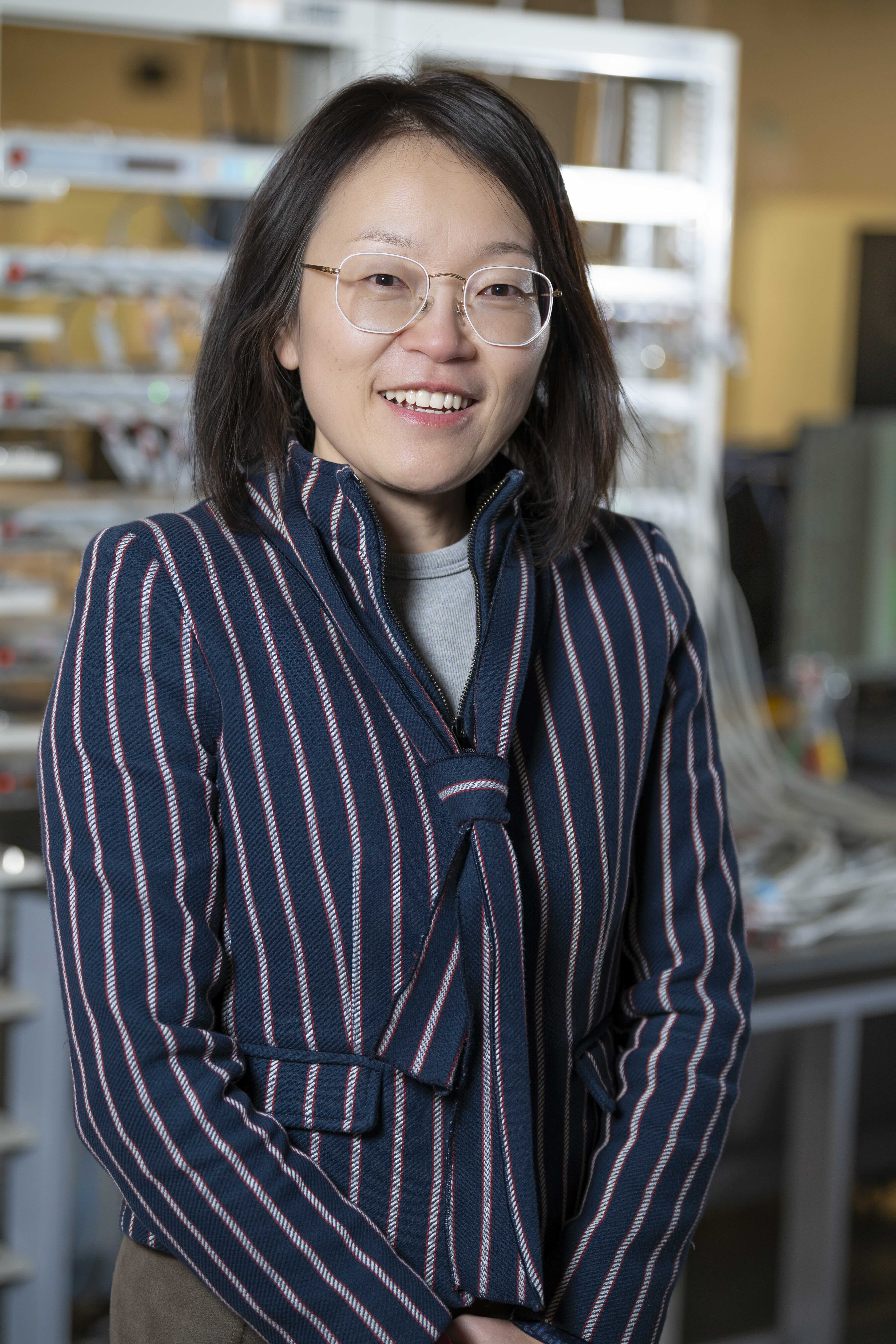
Dr. Ban’s research group at the University of Colorado Boulder focuses on materials development and surface/interface science and engineering for beyond–lithium electrochemical energy storage systems, with particular emphasis on nonaqueous sodium batteries and solid-state batteries. Her lab has developed novel nonaqueous liquid and solid electrolytes for sodium electrochemical processes, including a fluorine-free electrolyte platform that offers new pathways to eliminate fluorinated salts, reduce PFAS-related risks, and improve the safety and environmental footprint of battery technologies. In parallel, the group has established rapid synthesis methods for solid-state electrolytes and systematically investigated the roles of mechanical stress, grain boundaries, and interfaces on both ionic and electronic conduction, advancing fundamental understanding of how surface and interfacial phenomena govern electrochemical behavior. The research integrates electrochemical analysis with advanced characterization techniques to probe ion diffusion, charge-transfer processes, and degradation mechanisms in battery systems, and these tools have also been applied to study transport and failure processes in water desalination membranes. Dr. Ban’s program is highly collaborative, leveraging internal and external partnerships to address multidisciplinary challenges while training students and postdoctoral researchers in deep problem-solving skills that extend beyond routine operation of equipment. Her work contributes fundamental insights into materials synthesis, electrochemical behavior, and their dependence on bulk and surface structure, while simultaneously evaluating real-world considerations such as scalability, cost, and manufacturability. As a result, her research spans the full spectrum from fundamental materials design, synthesis, and characterization to materials scale-up and battery manufacturing.
keywords
Energy storage, batteries, electrochemistry, electrochemical energy storage, molecular layer deposition, lithium-ion batteries, magnesium batteries, sodium batteries, nonaqueous electrolytes, solid-state electrolytes, advanced manufacturing, surface modification, battery recycling, electrochemical analysis and characterization
MCEN 1024 - Chemistry for Energy and Materials Science
Primary Instructor
-
Fall 2020 / Fall 2021 / Fall 2022 / Spring 2023 / Fall 2023 / Fall 2024 / Spring 2025 / Fall 2025
Covers the basic physical and chemical fundamentals underlying the disciplines of energy and materials, with a focus on topics relevant to your mechanical engineering education. These fundamentals include atomic structure, stoichiometry, the periodic table, chemical bonding, states of matter, thermochemistry and chemical reactions. Recommended prerequisite: one year of high school chemistry. Degree credit not granted for this course and CHEM 1113, CHEM 1400, CHEN 1201, and CHEN 1211.
MCEN 5228 - Special Topics in Mechanical Engineering
Primary Instructor
-
Spring 2020 / Spring 2021 / Spring 2022 / Fall 2025
Subject matter to be selected from topics of current interest. May be repeated up to 30 credit hours.