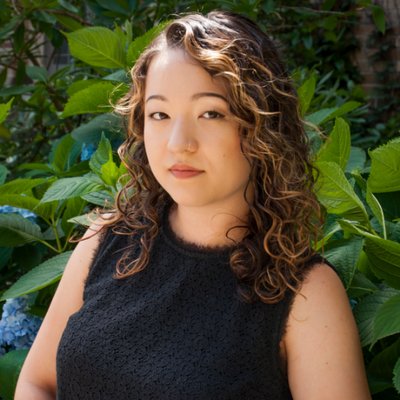
The Hiura lab investigates the ways in which our environments and biology interact to produce variation in social behavior over the lifespan. We study the socially monogamous prairie vole because they, like humans, are one of the rare mammalian species that form enduring pair bonds with their mating partners. We leverage molecular genetic, optical, and pharmacological techniques to understand what is special about how monogamous brains change over the lifespan to enable this unique social behavior.
MCDB 4980 - Honors Research
Primary Instructor
-
Fall 2025
Provides faculty-supervised research for students who have been approved by the departmental honors committee. Normally taken during the semester before completion of the honors thesis. Recommended prerequisite: MCDB 4840 or comparable research experience, and minimum GPA of 3.20.
MCDB 4990 - Honors Thesis
Primary Instructor
-
Spring 2024
Involves the preparation and defense of an honors thesis, based on faculty-supervised original research, including final phases of the research project. Recommended prerequisites: MCDB 4840 or MCDB 4980 or comparable research experience, and minimum GPA of 3.3 and approval by the MCDB Honors Committee.
MCDB 6000 - Introduction to Laboratory Methods
Primary Instructor
-
Spring 2024
Introduces methodology and techniques used in biological research. Designed as a tutorial between a few students and one faculty member. Students are expected to read original research papers, discuss findings, and to plan and execute experiments in selected areas. May be repeated up to 15 total credit hours.
NRSC 4092 - Behavioral Neuroendocrinology
Primary Instructor
-
Spring 2025
Provides an introduction to neuroendocrinology with a focus on the interaction between hormones on brain development and behaviorally relevant brain function, including reproductive behaviors, stress, biological rhythms and mood. Same as NRSC 5092.
NRSC 6000 - Introduction to Laboratory Methods
Primary Instructor
-
Fall 2025
Introduces methodology and techniques used in biological research. Designed as a tutorial between a few students and one faculty member. Students are expected to read original research papers, discuss findings, and to gain training in techniques necessary to plan and execute experiments in selected areas. These include but are not limited to, for example, surgical approaches, behavioral techniques, molecular biology approaches, and imaging. May be repeated up to 15 total credit hours.