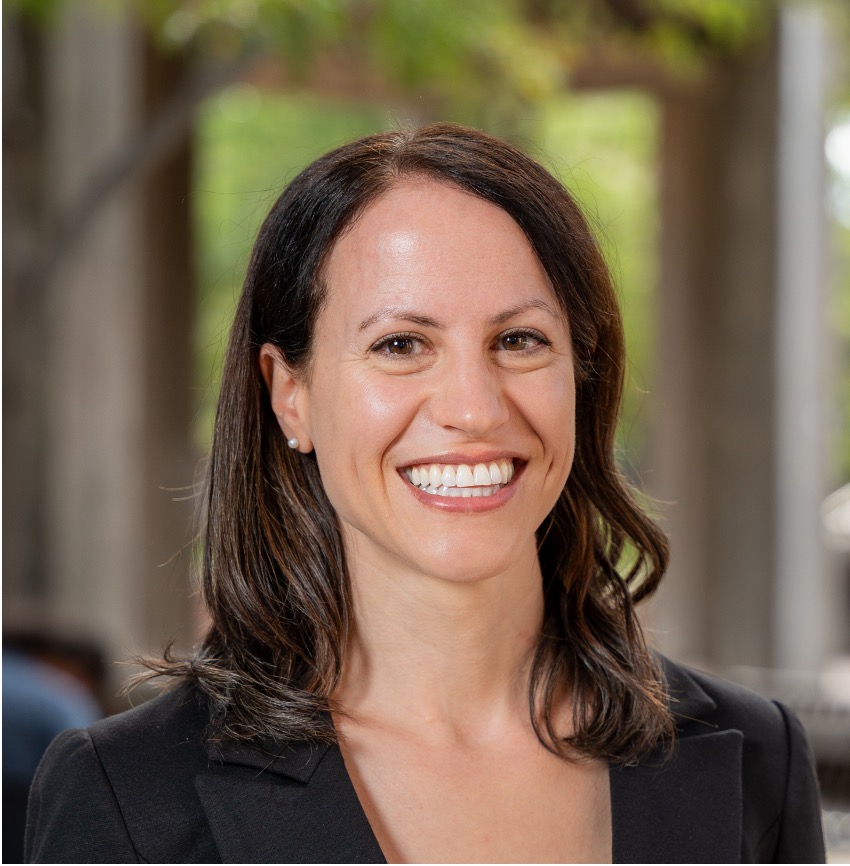
I lead the Image and Video Computing (IVC) Group at University of Colorado Boulder. Our aim is to create computing systems that enable and accelerate the analysis of visual information, as a critical precursor to discoveries and innovations that can benefit society at large. Our research involves computer vision, machine learning, crowdsourcing, human computation, human-computer interaction, accessibility, and (bio)medical image analysis. We develop both scalable automated algorithms and crowdsourced human intelligence systems for analyzing images and videos. Research problems addressed by our group include salient object detection, object segmentation, object tracking, (bio)medical image and video analysis, visual question answering, image captioning, assistive technologies for people who are blind and with low vision, image inpainting, and style transfer.
keywords
machine learning, human computation, crowdsourcing, (bio)medical image and video analysis
Captioning Images Taken by People Who Are Blind.
Lecture Notes in Computer Science (including subseries Lecture Notes in Artificial Intelligence and Lecture Notes in Bioinformatics).
417-434.
2020
Assessing Image Quality Issues for Real-World Problems.
Proceedings / CVPR, IEEE Computer Society Conference on Computer Vision and Pattern Recognition. IEEE Computer Society Conference on Computer Vision and Pattern Recognition.
3643-3653.
2020
Unconstrained Foreground Object Search.
Proceedings / IEEE International Conference on Computer Vision. IEEE International Conference on Computer Vision.
2030-2039.
2019
COEN 1500 - CEAS First Year Seminar
Primary Instructor
-
Fall 2025
The CEAS First Year Seminar is a small, discussion-based course designed to provide incoming first-year students a foundation to thrive as university scholars, meeting with them from their first day of classes through getting back the results of their first round of midterms. The seminar is a combination of a common curriculum (40% ) exploring texts concerning creating an engineering identity, the purpose of an engineering education and the larger values of the college community (mattering, belonging, agency, ownership, inclusivity and service) and a unique curriculum (60%) in which faculty members cultivate these values through their own areas of expertise and interest. This seminar represents the commitment of dedicated faculty to help incoming first-year students become an active and contributing part of the intellectual, inclusive, healthy, inquisitive, diverse, sustainable and socially engaged culture of the College of Engineering.
CSCI 4922 - Fundamentals of Neural Networks and Deep Learning
Primary Instructor
-
Spring 2026
Covers fundamentals of neural networks and deep learning and their use to address many societal problems. Students will learn to design and implement neural network architectures, train them, and evaluate their performance. Included will be examination of popular architectures such as fully connected, convolutional, recurrent, and transformer-based networks alongside learning strategies such as backpropagation, regularization, and transfer learning. Students will also gain practical, hands-on experience by applying learned skills to analyze visual and textual data. Recommended prerequisite: CSCI 4622. Same as CSCI 5922.
CSCI 5922 - Fundamentals of Neural Networks and Deep�Learning
Primary Instructor
-
Spring 2022 / Fall 2022 / Spring 2024 / Spring 2025 / Spring 2026
Covers fundamentals of neural networks and deep learning and their use to address many societal problems. Students will learn to design and implement neural network architectures, train them, and evaluate their performance. Included will be examination of popular architectures such as fully connected, convolutional, recurrent, and transformer-based networks alongside learning strategies such as backpropagation, regularization, and transfer learning. Students will also gain practical, hands-on experience by applying learned skills to analyze visual and textual data. Same as CSCI 4922.
CSCI 6950 - Master's Thesis
Primary Instructor
-
Fall 2021 / Spring 2022 / Summer 2022 / Fall 2022 / Spring 2023 / Fall 2023 / Spring 2024
Registration intended for Master's students preparing a thesis. May be repeated up to 50 total credit hours.
CSCI 7000 - Current Topics in Computer Science
Primary Instructor
-
Fall 2021 / Fall 2023 / Fall 2024
Covers research topics of current interest in computer science that do not fall into a standard subarea. May be repeated up to 18 total credit hours.