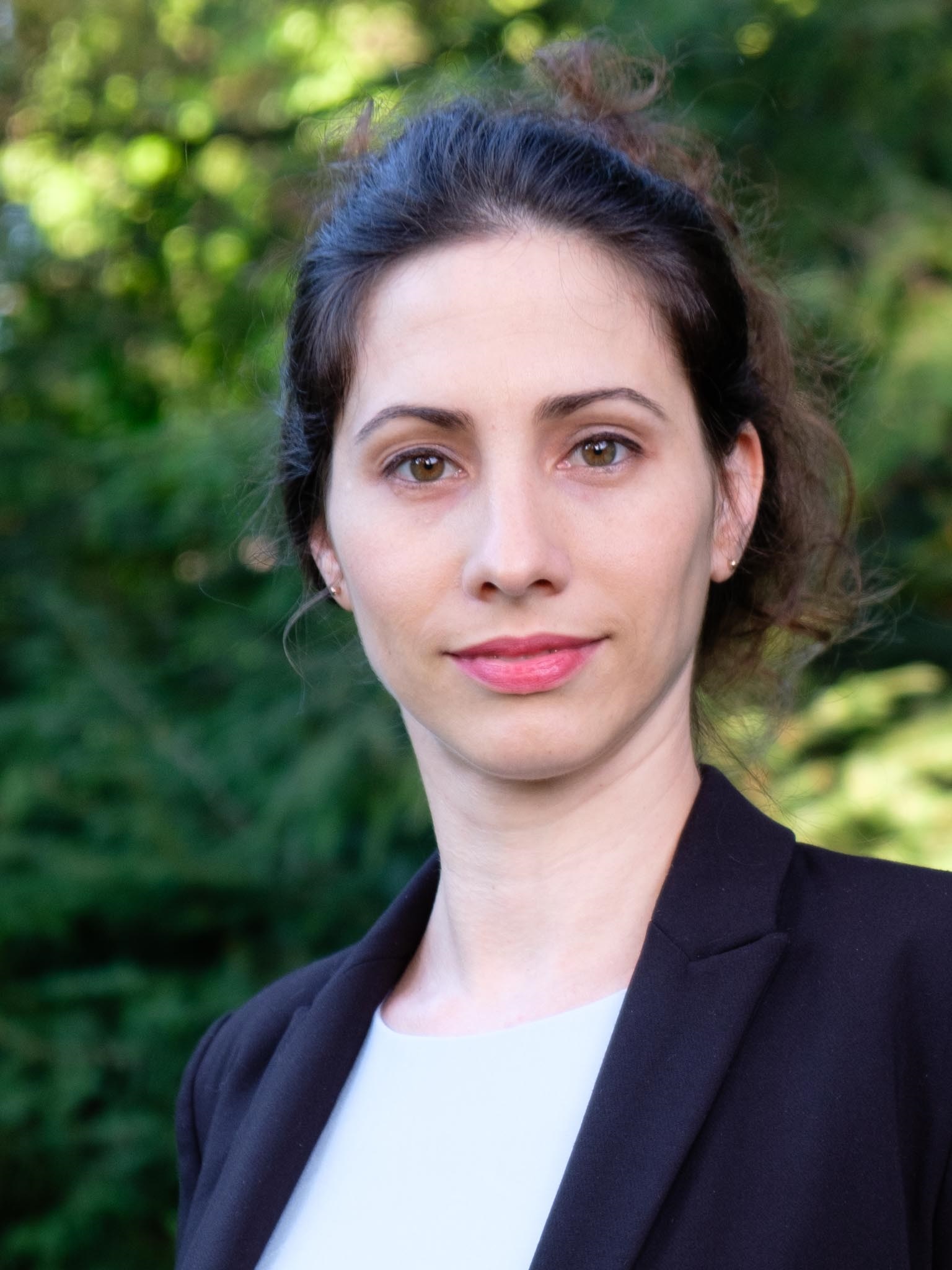
In our lab we study the complex interactions between microorganisms and their environment, using tools of microfluidics and quantitative video microscopy, to investigate the transport of microorganisms in complex environments, like viscoelastic and anisotropic liquids, and complex geometries. This understanding is necessary to address practical problems like antibiotic resistance and prevention and treatment of medical conditions.
keywords
soft matter physics, active matter, complex liquids, active liquid crystals, motion in low Re numbers, microorganism locomotion
PHYS 2020 - General Physics 2
Primary Instructor
-
Fall 2020 / Spring 2021 / Fall 2023 / Spring 2024 / Fall 2024
Includes three lectures, one two-hour laboratory/recitation per week, plus three evening exams in the fall and spring semesters. Covers electricity and magnetism, light and modern physics. Designed for life science majors, including premed students. Natural science majors with a knowledge of calculus and others taking calculus are urged to take the calculus-based courses PHYS 1110, PHYS 1120, PHYS 1140 and PHYS 2130, rather than PHYS 2010 and PHYS 2020.
PHYS 4230 - Thermodynamics and Statistical Mechanics
Primary Instructor
-
Fall 2021 / Spring 2023
Statistical mechanics applied to macroscopic physical systems; statistical thermodynamics, classical thermodynamics systems; applications to simple systems. Examines relationship of statistical to thermodynamic points of view.
PHYS 4560 - Introduction to Biophysics
Primary Instructor
-
Spring 2026
Covers an introduction to the physics of living systems. Focuses on how living systems are able to generate order, with both physical principles and biological examples. Covers the development of quantitative models for biological systems, including estimates. Taught from a physics perspective, with biology background introduced as needed. Recommended prerequisite: PHYS 4230. Same as PHYS 5560 and MCDB 4560 and MCDB 5560.
PHYS 5560 - Introduction to Biophysics
Primary Instructor
-
Spring 2026
Covers an introduction to the physics of living systems. Focuses on how living systems are able to generate order, with both physical principles and biological examples. Covers the development of quantitative models for biological systems, including estimates. Taught from a physics perspective, with biology background introduced as needed. Same as PHYS 4560 and MCDB 4560 and MCDB 5560.