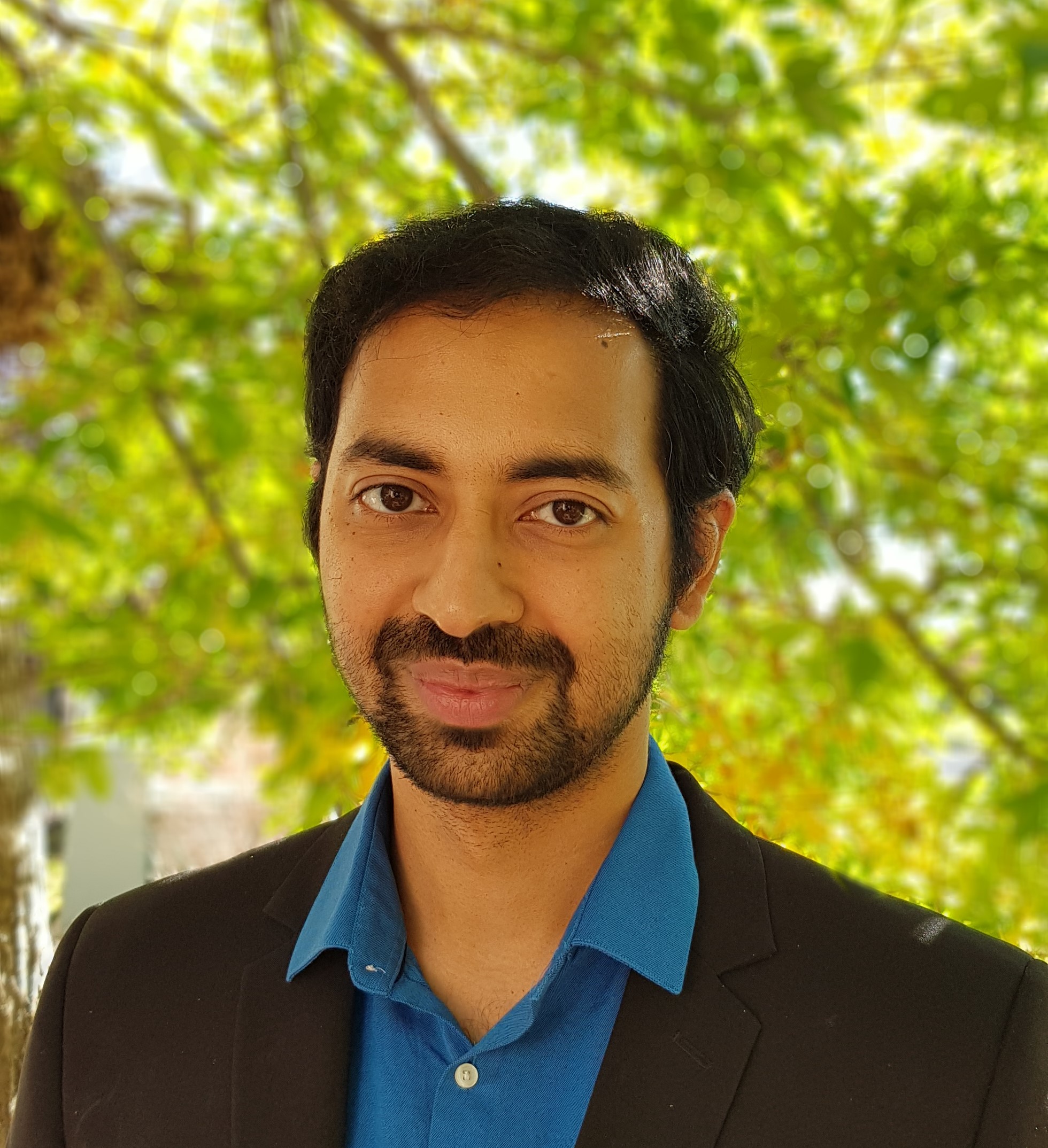
Dr Madabhushi's research goal is to improve the performance of our infrastructure under geohazards by engineering with - not against – the response of geomaterials. He hopes to achieve this by deepening the insight and understanding of geotechnical problems from a mechanistic point of view. The complementary use of physical modeling, and in particular centrifuge modeling, with numerical or analytical models is a key component of his research. The combination of techniques is used to fundamentally explore the deformation and failure mechanisms of a variety of civil engineering systems, such as foundations, retaining walls, coastal defenses and earthen slopes. As the design paradigms for tomorrow's infrastructure continually evolve, striking the balance between efficiency and sustainability with multi-hazard resiliency requires the interacting components in civil engineering systems to be understood at a fundamental level. Relating the observed and predicted material response of the soil to the global system behavior, for example progressive dynamic soil-structure interactions, fluid-soil-structure interaction, changes of climatic environments, and the consequences of soil liquefaction are of particular interest.
keywords
Centrifuge Modeling, Multi-Hazard Modeling of Geotechnical and Civil Engineering systems, Static and Dynamic/Seismic Soil Structure Interaction, System level response to Soil Liquefaction, Thermomechanical Response, Landslide Triggering Comparative study between centrifuge modeling and numerical analyses, Instrumentation development and verification for geotechnical applications, Coastal Engineering, Fluid-soil-structure interaction
CVEN 3708 - Geotechnical Engineering 1
Primary Instructor
-
Fall 2023 / Fall 2025
Covers basic engineering characteristics of geological materials; soil and rock classifications; site investigation; physical, mechanical, and hydraulic properties of geologic materials; the effective stress principle; soil and rock improvement; seepage analysis; stress distribution; and consolidation and settlement analyses. Selected experimental and computational laboratories.
CVEN 3718 - Geotechnical Engineering 2
Primary Instructor
-
Fall 2020 / Fall 2021 / Fall 2022 / Spring 2024 / Spring 2025
Covers stress analysis and plastic equilibrium, sheer strength of soil, bearing capacity, lateral earth pressures, slope stability and underground construction. Analysis and design of shallow and deep foundations, retaining walls and other earth and rock structures. Selected experimental and computational laboratories.
CVEN 4728 - Foundation Engineering
Primary Instructor
-
Spring 2021 / Spring 2022 / Spring 2023 / Spring 2024 / Spring 2025 / Spring 2026
Focuses on geotechnical design of shallow and deep foundations, including spread footings, mats, driven piles and drilled piers. Coverage includes bearing capacity, settlement, group effects and lateral load capacity of the various foundation types. The application of lower and upper bound plasticity analyses for the structural and geotechnical design of foundation systems, and how these relate to design codes, is additionally covered. Same as CVEN 5728.
CVEN 5728 - Foundation Engineering
Primary Instructor
-
Spring 2021 / Spring 2022 / Spring 2023 / Spring 2024 / Spring 2025 / Spring 2026
Focuses on geotechnical design of shallow and deep foundations, including spread footings, mats, driven piles and drilled piers. Coverage includes bearing capacity, settlement, group effects and lateral load capacity of the various foundation types. The application of lower and upper bound plasticity analyses for the structural and geotechnical design of foundation systems, and how these relate to design codes, is additionally covered. Same as CVEN 4728.
CVEN 5738 - Centrifuge Modeling for Sustainable Infrastructure: Advanced Experimental Methods
Primary Instructor
-
Fall 2025
Studies the application of advanced experimental methods used in physical modeling for civil engineering research and practice. Topics include acquisition and analysis techniques of experimental data including filtering in the frequency domain, wavelet transforms and digital image correlation techniques to obtain displacement and strain fields. Centrifuge modeling considerations are theoretically and practically introduced, including scaling laws, boundary conditions and modeling errors for static and dynamic test design towards improving the sustainability of civil engineering infrastructure. Recommended prerequisite: Advanced Mechanics of Materials (CVEN 4161/5161) or Foundations Engineering (CVEN 4728/5728).
CVEN 6958 - Master's Thesis
Primary Instructor
-
Spring 2023 / Fall 2023 / Spring 2024 / Fall 2024 / Spring 2025 / Summer 2025