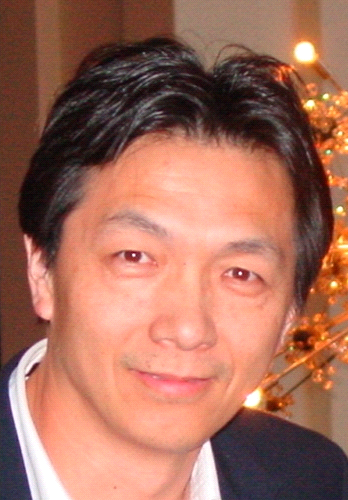
Our research focuses on the discovery and control of novel quantum materials driven by the interplay of strong spin-orbit interactions and electron-electron correlations. We pursue a comprehensive program that combines the growth of high-quality single crystals with systematic investigations of the emergent physics these materials exhibit. A central component of our work is the methodical search for new quantum materials, particularly transition-metal oxides and chalcogenides, synthesized in bulk single-crystal form. Our group is equipped with advanced synthesis capabilities and extensive facilities that enable the preparation of a wide range of complex materials. We also employ a broad spectrum of experimental techniques to characterize structural, transport, magnetic, thermal, and dielectric properties as functions of chemical composition, temperature, magnetic field, and pressure. Many of our measurements are performed under extreme conditions, including ultralow temperatures, high magnetic fields, and high pressures, allowing us to access and control exotic quantum phases. In addition, we have established broad collaborations with leading scientists throughout the United States, further enhancing the scope and impact of our research. Our work has been supported by the U.S. National Science Foundation and the U.S. Department of Energy.
keywords
Novel quantum materials, Control of quantum states, Material properties at extreme conditions of strong magnetic field high, pressure, and ultra-low temperature.
MSEN 2000 - Materials in Technology
Primary Instructor
-
Spring 2026
Introduces the basic principles of materials science including material properties and function with a focus on the role of materials in technology. Explores the current research and industrial applications of materials in biotechnology, medicine, energy, sustainability, computing, and construction.
MSEN 5919 - Special Topics in MSE
Primary Instructor
-
Spring 2020
Offers an opportunity for special topics in MSE. Subject arrangement to fit the needs of the program. May be repeated up to 10 total credit hours.
PHYS 1110 - General Physics 1
Secondary Instructor
-
Spring 2024
First semester of three-semester sequence for science and engineering students. Covers kinematics, dynamics, momentum of particles and rigid bodies, work and energy, gravitation, and simple harmonic motion. Degree credit not granted for this course and PHYS 1115.
PHYS 1140 - Experimental Physics 1
Primary Instructor
-
Fall 2023
Introduces experimental physics through laboratory observation of a wide range of phenomena. Covers experiments on physical measurements, including mechanics, electricity & magnetism, and optics, with the mathematical analysis of physical errors associated with the experimental process.
PHYS 2010 - General Physics 1
Secondary Instructor
-
Fall 2018
Includes three lectures, one two-hour laboratory/recitation per week, plus three evening exams in the fall and spring semesters. Covers mechanics, heat and sound. Thorough presentation of fundamental facts and principles of physics using algebra and trigonometry. Designed for life science majors, including premed students. Natural science majors with a knowledge of calculus and others taking calculus are urged to take the calculus-based courses PHYS 1110, PHYS 1120, PHYS 1140 and PHYS 2130, rather than PHYS 2010 and PHYS 2020. Department enforced prerequisites: ability to use high school algebra and trigonometry.
PHYS 3330 - Electronics for the Physical Sciences
Primary Instructor
-
Fall 2020 / Spring 2021 / Fall 2021 / Fall 2024 / Spring 2025 / Fall 2025
Introduces laboratory electronics for physical science students. Includes basic electronic instruments, dc bridge circuits, operational amplifiers, bipolar transistors, field-effect transistors, photodiodes, noise in electronic circuits, digital logic and microcontrollers. Students gain hands-on experience in designing, building and debugging circuits. Two lectures and one three hour laboratory per week. Concludes with a final project in which students design and build an experiment of their choice and present a seminar on the results.
PHYS 4340 - Introduction to Solid State Physics
Primary Instructor
-
Spring 2018 / Spring 2019 / Spring 2020 / Spring 2022 / Spring 2023
Discusses crystal structure, lattice dynamics, band theory, semiconductors and ferromagnetism.